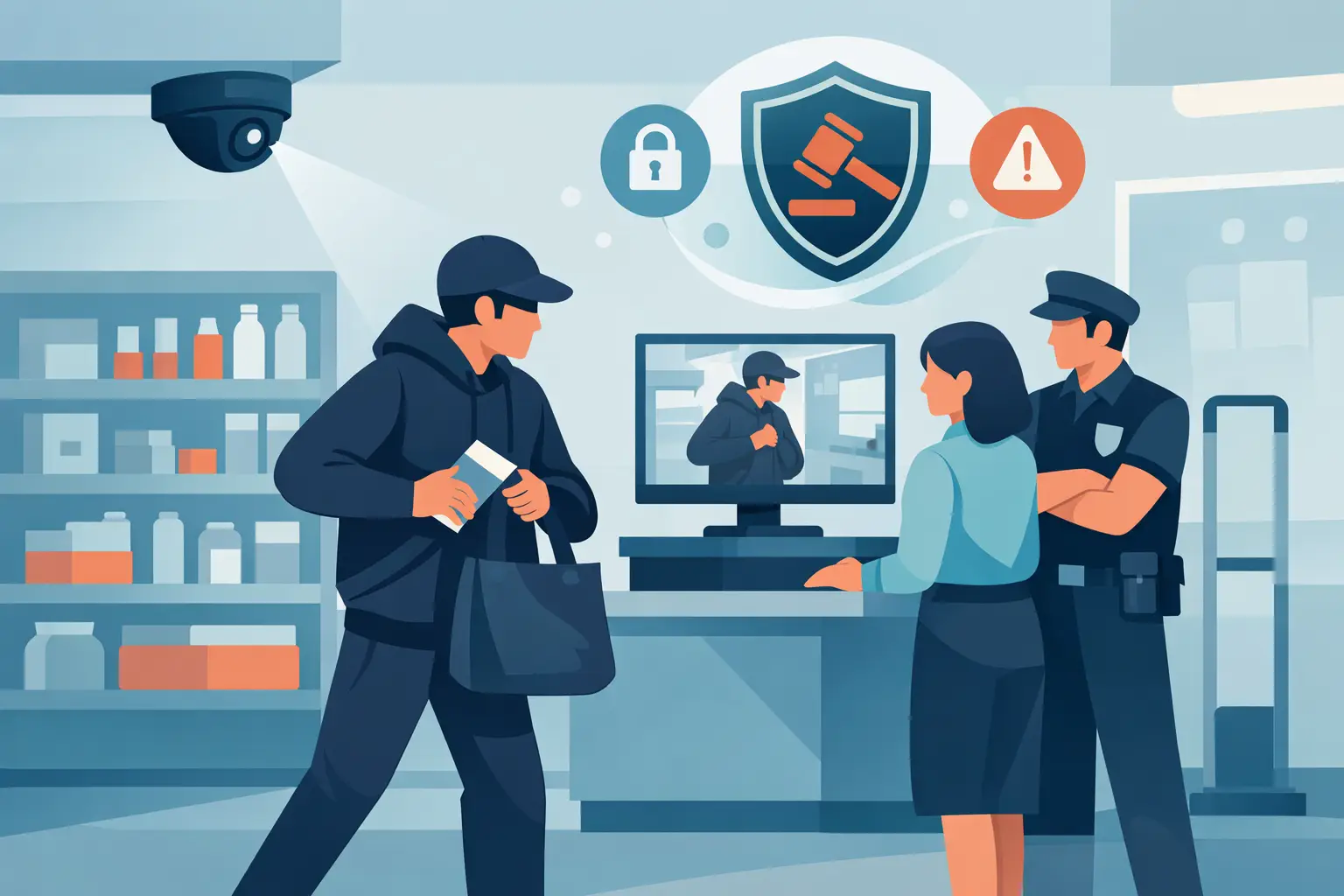
A missing bottle of spirits, a damaged security tag or a familiar gap on a high-value display is rarely just a stock issue. It can affect staff confidence, customer experience and the profitability of an entire site. Knowing how to deter shoplifting legally means putting clear, visible controls in place without exposing your business to claims of discrimination, unlawful detention or misuse of personal data.
The most effective approach is preventative. Good retail security makes theft more difficult, makes detection more likely and gives staff a calm, lawful process to follow when concerns arise. It should protect your stock without treating every genuine customer as a suspect.
How to deter shoplifting legally: begin with a site assessment
Shoplifting risk is not the same in every store. A convenience retailer with self-service tills, a fashion shop with open changing rooms and a large homeware outlet with multiple exits will each need a different plan. Before adding guards, cameras or security tags, assess where loss is occurring and when.
Review incident records, stock discrepancies, delivery arrangements, blind spots, entrance and exit routes, fitting rooms, staff-only areas and high-value product locations. Consider whether the issue is opportunistic theft, organised shoplifting, repeat incidents, internal theft, or a combination of risks. This prevents money being spent on highly visible measures that do not address the actual weakness.
A practical assessment should also consider trading hours, lone-working periods and local risks. For some premises, a professional security officer at peak times is the right response. For others, regular mobile patrols, improved access control or a revised layout may offer better value. The aim is a proportionate plan based on threat level, not a one-size-fits-all security presence.
Make theft difficult without making shopping difficult
Visible deterrents work best when they are well placed and supported by everyday retail discipline. Customers should be able to navigate the store easily, while staff retain clear sightlines across key areas.
Keep high-value, small or easily concealed products close to staffed positions or behind controlled displays. Use locked cabinets, safer cases, tethered displays or secure shelving where the product risk justifies it. Electronic article surveillance tags can be particularly useful for clothing, cosmetics, alcohol and higher-value goods, provided staff know how to apply, remove and respond to them correctly.
Store design matters. Avoid tall displays that create hiding places or obstruct views of entrances, tills and aisles. Keep changing rooms, toilets and secondary exits under appropriate observation, while preserving customer privacy. Good lighting, tidy shelving and clear signage signal that a premises is actively managed. Disorder can suggest that theft will go unnoticed.
Cash handling requires the same attention. Reduce the amount held at tills, use regular cash lifts and make safes and back-of-house areas inaccessible to unauthorised people. Theft prevention is stronger when stock, cash and access procedures reinforce one another.
Use CCTV lawfully and transparently
CCTV can deter theft, support incident investigations and provide evidence where a crime has occurred. It must, however, be operated in line with UK data protection requirements. Cameras should have a defined security purpose, cover relevant risk areas and avoid unnecessary monitoring of private spaces.
Display clear signs telling people that CCTV is in use and who is responsible for the system. Restrict access to footage, keep recordings securely and set a sensible retention period. Your business should have a policy covering requests for footage, disclosure to police and the handling of subject access requests.
For larger or higher-risk deployments, a data protection impact assessment may be appropriate, especially where cameras cover extensive public areas, use audio recording or are combined with other monitoring technology. Do not install cameras simply because they are available. The footage must be useful, lawful and managed properly.
Train staff to be visible, professional and fair
Staff are often the strongest day-to-day deterrent. A friendly greeting on entry, regular floor presence and a simple offer of assistance show that customers have been noticed. This is often more effective than confrontation, particularly where theft is opportunistic.
Training should set clear boundaries. Employees should not accuse someone of stealing based on appearance, age, ethnicity, disability, clothing or any other personal characteristic. Decisions must be based on observed behaviour and credible evidence. Consistent procedures also help reduce the risk of discriminatory treatment and protect staff from making pressured decisions alone.
Give teams a straightforward reporting route. They should know who to contact, where to record concerns and when to call a manager, security officer or police. Encourage accurate, factual notes: time, location, description, items involved, actions observed and any available CCTV reference. Assumptions and emotive language make an incident record less useful.
Lone workers should never be expected to challenge suspected shoplifters. Their safety comes first. Where there is aggression, threats, suspected weapons or a serious disturbance, staff should create distance, contact the police and follow the site’s emergency procedures.
Understand the limits on stopping and searching people
Retailers and security teams do not have unlimited powers to detain or search customers. A request to inspect a bag is just that: a request. A customer can refuse, and staff should not physically force a bag search without lawful authority.
A citizen’s arrest may be possible in limited circumstances under section 24A of the Police and Criminal Evidence Act 1984, but this is a serious step, not a routine loss-prevention tool. The conditions are strict and depend on the offence, reasonable grounds and whether arrest is necessary because police attendance cannot reasonably be relied upon in time. Any use of force must be reasonable, necessary and proportionate.
For most retailers, the safer operational position is to observe, preserve evidence, avoid confrontation and involve the police where necessary. If your business uses security officers, they should be appropriately licensed, trained in conflict management and working under clear assignment instructions. A professional presence can manage difficult situations with better judgement, communication and escalation control than an untrained colleague acting alone.
Create a consistent response after an incident
The response after suspected theft can determine whether the same issue keeps happening. Record each event, retain relevant CCTV, note the value and type of goods involved, and identify any pattern by time, product or location. This information allows managers to adjust staffing, merchandising and patrol routes where they will have the most effect.
Where police are involved, provide factual evidence promptly. Do not publish images of suspected offenders on social media, display them in-store or share them informally with other businesses without taking proper legal advice. Misidentification, defamation and data protection risks can quickly outweigh any perceived deterrent value.
Review staff welfare as well. A colleague who has faced abuse or intimidation may need a debrief, support and revised working arrangements. Theft prevention is part of a wider duty to provide a safe workplace, not just a method of reducing shrinkage.
Combine people, procedures and visible protection
Technology alone cannot replace active management. Tags are ineffective if they are not applied; cameras are ineffective if nobody reviews incidents; and policies are ineffective if staff do not feel confident using them. The strongest results usually come from combining well-trained people, a practical store layout, reliable monitoring and clear escalation procedures.
For multi-site retailers or premises with recurring losses, an external risk assessment can help prioritise investment. Hawk Security Group can provide tailored retail loss-prevention support, including trained security personnel and site-specific deployment plans, where a visible and responsive security presence is required.
A lawful deterrent strategy should leave honest customers feeling welcome and staff feeling protected. When your controls are proportionate, consistently applied and supported by clear evidence, you can reduce loss while maintaining the professional standards your business depends on.